
Why bluffing in cash games requires a different approach than tournaments
When you sit down at a cash table, the basic mechanics of bluffing are the same as in any poker format: you try to represent a stronger hand than you hold to force folds. What changes is the context. In cash games you can reload chips, blinds are static, and players often have deeper stacks relative to the pot. Those factors alter both the optimal frequency of your bluffs and the ways you construct them.
You should view cash-game bluffing as a long-run investment rather than a one-off gamble. Because opponents will rebuy and adjust more slowly, your bluffs can be more nuanced and frequency-sensitive. You should also be more cautious with all-in or overcommitted bluffs because deeper stacks make calls more attractive for opponents who can absorb a loss.
Key factors that determine how often you should bluff
Stack depth and pot commitment
Stack sizes are the single biggest variable that changes your bluffing frequency. With deeper stacks, opponents can call more often on the turn or river because the potential payoff of a drawing hand is larger. That means your optimal bluff frequency generally decreases as effective stacks grow: you need to choose spots where fold equity is credible and not rely on bluffs to win large pots.
Table composition and opponent types
You should constantly profile opponents. Against tight, risk-averse players, you can increase bluff frequency because their threshold for calling is higher. Versus loose or overly sticky opponents, your bluffing value collapses; instead, shift toward value-betting and capitalizing on their mistakes.
- Small-ball cash tables: more players see cheap flops—use selective, position-based bluffs.
- High-stakes deep-stacked tables: prefer fewer, larger-value bluffs with balanced ranges.
- Mixed-skill tables: exploit predictable tendencies but avoid becoming too polarized.
Position and betting sequences
Your position at the table amplifies or reduces bluff profitability. In late position you can apply pressure with raises and continuation bets because you have more information and fewer players to fold. Early-position bluffs should be rarer and more carefully sized to avoid being called down cheaply.
Betting lines also matter: multi-street bluffs require consistent story-telling. If you plan a river bluff, your turn line must make that river bluff believable. In cash games it’s often better to choose spots where your line is coherent and your range advantage is clear, rather than forcing creative bluff sequences that are easily picked apart by observant opponents.
These considerations show why bluff frequency in cash games is more situational and often lower than many amateur players expect; in the next section you’ll get concrete guidelines and numeric ranges for how often to bluff in common cash-game scenarios and how to size those bluffs effectively.

Practical bluff frequencies and numeric guidelines
Now for the concrete numbers players ask for. These are not immutable rules, but reasonable target ranges to anchor your decisions.
– Flop continuation bets (in position): on dry, high-card boards (K-7-2r, A-8-3r) aim to c-bet 65–85% of the time; on coordinated, draw-heavy boards (J-T-9 with two suits) reduce to roughly 40–60%. Out of position lower these by 10–20 percentage points—OOP bluffing is costlier because you act first on later streets.
– Turn barrels: if your flop c-bet was a bluff and the turn brings more equity to the caller (a card that completes many draws), bluff the turn rarely—about 15–30% depending on fold equity and blockers. If the turn improves your perceived range (e.g., it pairs your advertised broadways), you can continue bluffing 30–50% of your missed-flop range.
– River bluffs: these should be the rarest. A practical target is that only 10–25% of your hands that reached the river and have no showdown value should be bluffs. River bluff frequency rises only when you have strong blockers or a credible, coherent line.
Adjust all frequencies for opponent tendencies: against very tight players add 10–20 points; versus sticky players subtract similar amounts.
A simple, indispensable tool is the break-even calling frequency: if the pot is P and you bet B, the opponent must call at frequency B/(P+B) to break even. To prevent exploitability your bluff-to-value ratio should roughly equal B/P. Example: a one-third pot bet (B = P/3) implies B/P = 1/3 — roughly one bluff for every three value bets. A half-pot bet implies one bluff per two value bets. Larger bet sizes demand proportionally more bluffs.
Sizing bluffs: when to bet big, small, or check-fold
Sizing determines how many bluffs you need and therefore whether a bluff is realistic.
– Small bets (20–40% pot): efficient for frequent, lower-risk bluffs. They require fewer bluffs relative to value (B/P is smaller), so they’re ideal when your range naturally contains many middling value hands and when opponents tend to fold to small pressure.
– Medium bets (50–75% pot): most versatile in cash games. They balance fold equity and the need for bluffs; use them when your line is consistent and you have some blockers or backdoor equity.
– Large bets and overbets (>100% pot): polarizing. They force opponents into hard decisions but require a high proportion of bluffs in your river range (B/P > 1). Against competent, deep-stacked players these are risky—you’ll struggle to find enough credible bluffs. Reserve large bluffs for spots where you hold strong blockers or a history that supports the story.
Also consider stack-to-pot ratios: with deeper stacks, prefer smaller sizes earlier and avoid overbet-bluffing because opponents can call down with implied odds. Conversely, short-stack situations can justify more aggressive sizes, since opponents have less room to maneuver.
Targeted bluffing: choosing precise hands
Bluffs aren’t random; they should be specific hands that maximize credibility.
– Blocker hands: hands that remove strong value combinations from opponents’ ranges (e.g., holding the ace of the flush suit on a river with a potential nut flush) are prime river-bluff candidates.
– Missed semi-bluffs with backdoor equity: hands that had some showdown or backdoor outs on prior streets (gutshots, backdoor flushes) are easier to play as multi-street bluffs.
– Air hands that fit your line: if your preflop and flop actions heavily represent a made hand, choose bluffs that plausibly fit that story rather than thin, disconnected holdings.
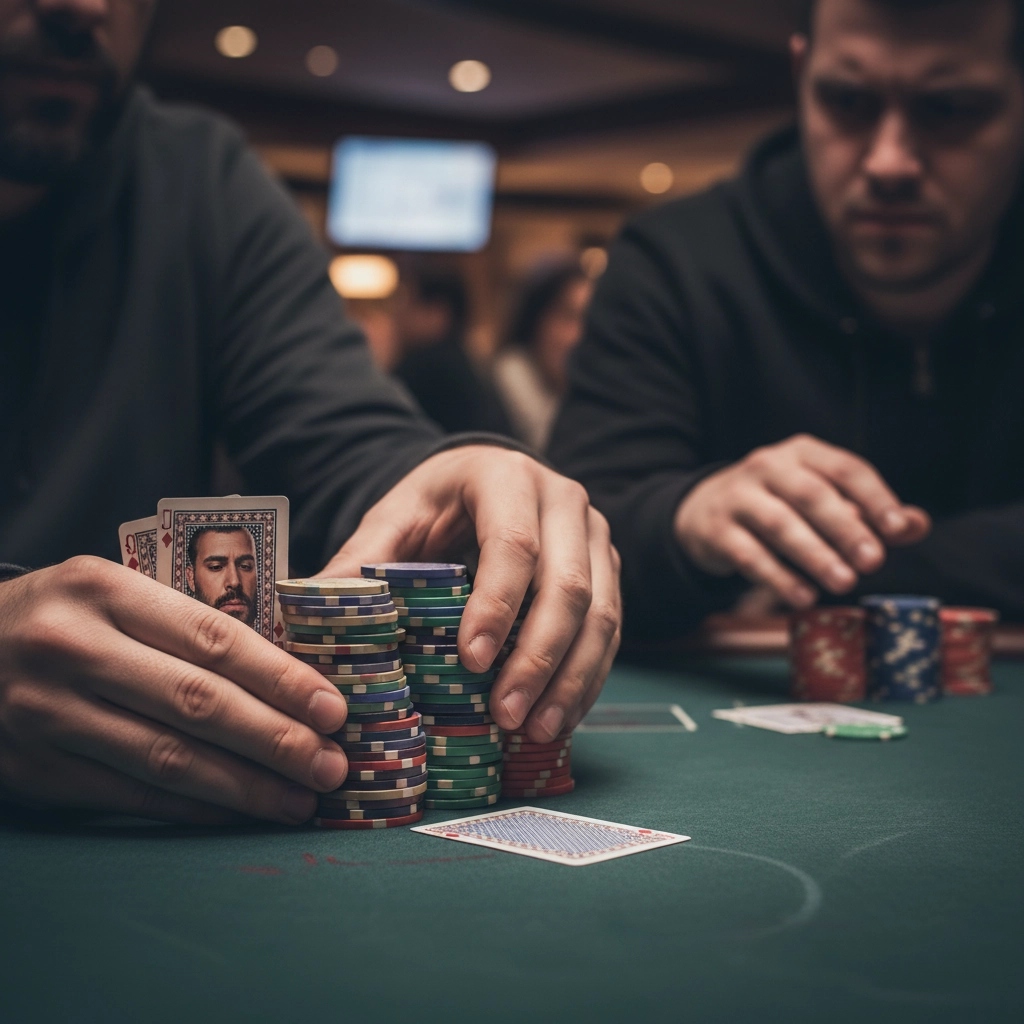
In cash games the best bluffs are the ones you can credibly tell again tomorrow—select them sparingly, size them consistently, and always ask whether your range supports the story you’re selling.
Putting bluffing into everyday cash-game practice
Bluffing in cash games is as much a habit as it is a tactic. Build a routine that emphasizes selective aggression, consistent sizing, and ongoing opponent assessment. Start each session with clear, measurable goals (e.g., “reduce river bluff attempts by 25% this week” or “track flop c-bet success by position”) and end with a short review of hands where you forced or folded to aggressive lines. Keep bankroll discipline and tilt control central—bluffs made while frustrated are the quickest path to losses.
- Set one specific bluffing metric to monitor per session (frequency, success rate, or blocker usage).
- Use hand reviews and basic HUD stats to confirm your lines are believable and profitable.
- Practice range-construction exercises away from the table so your bluffs match plausible storylines at the table.
- When in doubt, err on the side of fewer bluffs; refine frequency upward only as your reads and data support it.
For deeper, structured study on balancing frequencies and building credible ranges, consult targeted training resources such as Upswing Poker.
Frequently Asked Questions
How should my bluff frequency change when transitioning from tournaments to cash games?
Shift toward fewer, more carefully chosen bluffs in cash games. With deeper and static stacks, opponents can call down more often, so prioritize spots with real fold equity, strong blockers, or a coherent multi-street story rather than volume bluffing.
What bet sizes work best for bluffs in deep-stacked cash games?
Medium sizes (50–75% pot) are generally the most practical: they balance fold equity and the number of bluffs required. Small bets can be used for frequent, low-risk bluffs; large overbets should be rare and reserved for spots where you hold significant blockers or a very credible range advantage.
Which hands should I choose as river bluffs?
Pick hands that plausibly remove opponents’ strong holdings (blockers), have some prior equity or credibility (missed semi-bluffs, backdoor draws), and fit your betting narrative. Avoid thin, disconnected hands that contradict your earlier actions—credibility is key on the river.