
Why semi-bluffing on the turn and river changes the story of a hand
You already know a semi-bluff is a bet with a hand that isn’t yet best but can improve to the best hand. On the flop you often have more live outs and a larger field effect; on the turn and river the dynamics shift. The pot is bigger, bet sizes are larger relative to remaining stacks, and opponents have more information. That means the same semi-bluff that worked on the flop can be either much more powerful or much riskier later in the hand.
When you consider semi-bluffing on the turn or river, you should be thinking in two parallel tracks: your current chance to improve (raw equity) and your chance to make your opponent fold (fold equity). You win either by hitting your draw or by getting your opponent to fold a better hand. The relative weight of those outcomes changes as streets progress, so you need to alter when and how often you semi-bluff.
Key factors you must evaluate before committing to a turn or river semi-bluff
Fold equity vs. raw equity: why both matter
Estimate your outs and your equity if called, then compare that to the likelihood your opponent folds to a bet of the intended size. If you have many outs (e.g., open-ended straight or multiple backdoor combos), your semi-bluff leans on raw equity. If your outs are limited (e.g., one card to a flush), you’re relying more heavily on fold equity. The bet size and pot odds you offer when you bet tell you which component needs to carry the play.
Board texture and how it affects perceived strength
- Coordinated boards (connected, paired, or with multiple draws) make it easier for opponents to call, reducing fold equity.
- Dry boards (few draws, disconnected) let you represent strong hands more credibly and generally increase fold equity.
- River blanks versus mission-completing cards: a river that completes obvious draws typically lowers the chance of a successful semi-bluff unless you can credibly represent the completed range.
Stack sizes, pot commitment, and multi-street planning
Short stacks reduce fold equity because opponents are pot-committed more quickly; deep stacks give you room to apply pressure but also give callers better implied odds on draws. Think through how a turn semi-bluff sets up the river: do you plan to barrel again if called, or are you prepared to check-fold? Multi-street commitment should influence whether the turn semi-bluff is worth the risk.
Opponent tendencies and range context
- A tight opponent who folds to pressure is a prime target for semi-bluffs.
- Loose or sticky opponents who call wide reduce your chances of success and push you toward playing draws straightforwardly.
- Consider where the opponent’s range is capped—if their calling range is mainly medium-strength hands, your semi-bluff is more likely to succeed than against someone who calls with top pair or better.
With these assessment tools—equity calculation, board reading, stack and line planning, and opponent profiling—you can start to choose favorable turn and river semi-bluff spots. In the next section you’ll get concrete turn and river scenarios, bet-sizing recommendations, and step-by-step examples of when to follow through or abandon a semi-bluff.

Turn scenarios and bet-sizing: when to lean in
On the turn you must choose a size that balances fold equity with the pot odds you give your draw if called. A few practical sizing rules of thumb work well as starting points:
- When you have lots of outs (open-ender + backdoors), favor smaller sizes (25–40% of pot). You want to keep worse hands and weaker draws in while still applying pressure—your raw equity can win at showdown even if called.
- If your outs are thin (one-card flush or a single pair-improver) and you need folds, size up to 50–75% pot to make opponents pay to continue.
- Against one opponent, larger bets gain more fold equity. In multiway pots, shrink sizes and generally avoid pure semi-bluffs because fold equity collapses.
- Consider stack depth: with deep stacks, you can opt for a smaller turn bet to set up a larger river pressure; with shallow stacks, a larger turn bet may be necessary to end the hand or fold out medium-strength hands.
Example: pot is $100 on the turn, you hold a double-gutter with backdoor flush and roughly 40% equity. A 30–35% pot bet ($30–$35) invites calls from worse hands and preserves implied odds; a $60 bet would rely primarily on fold equity and risk getting called by hands that crush you.
River decisions: finishing the semi-bluff or folding
Once you reach the river, raw equity is binary—either you made your hand or you didn’t. Your decision to fire again should be based on range credibility, blockers, and opponent tendencies.
- If the river completes obvious draws and you missed, only continue as a bluff when you can credibly represent the completed hand and hold strong blockers (e.g., you hold the ace of that suit).
- If the river is a blank and your turn bet was polarizing, a second barrel sized at 40–70% pot can succeed often—bigger if your opponent is capable of folding top pair. Avoid tiny bluffs that give good pot odds to call.
- Against calling stations or players who show down-leaning ranges, don’t bluff river without the nuts or a near-nut blocker; check-fold instead.
Overbets on river can work when your range contains bluffs and value hands and you block the nuts, but they’re high variance—reserve them for spots where your perceived line credibly polarizes you into either the very best hands or total air.
Three play-by-play examples: turn-to-river lines
- Example A (follow through): Hero 100bb, pot $40 on flop, turn to $120. Board: K♠-9♣-7♥-8♦. Hero holds Q-10 (open-ender). Turn bet 30% ($36) to deny equity and set up river. River blank (2♣): fire 45% ($54) — credible as a K or slow-played two pair; opponent folds.
- Example B (abandon): Heads-up, pot $150 on turn, villain sticky. Board paired and coordinated; Hero has one-card to a flush. Turn bet 70% to fold out medium pairs, villain calls. River blanks and villain shows resistance — check and fold if faced with large shove.
- Example C (blocker bluff on river): Pot $200 on turn, you bet small with A♣-J♣ on a Q♣-7♣-2♦-9♦ runout (missed nut flush). River is K♣ (completes clubs). You have the ace of clubs (nut blocker). A polarized 60–80% river bluff can succeed versus a player who folds top pair to aggression.
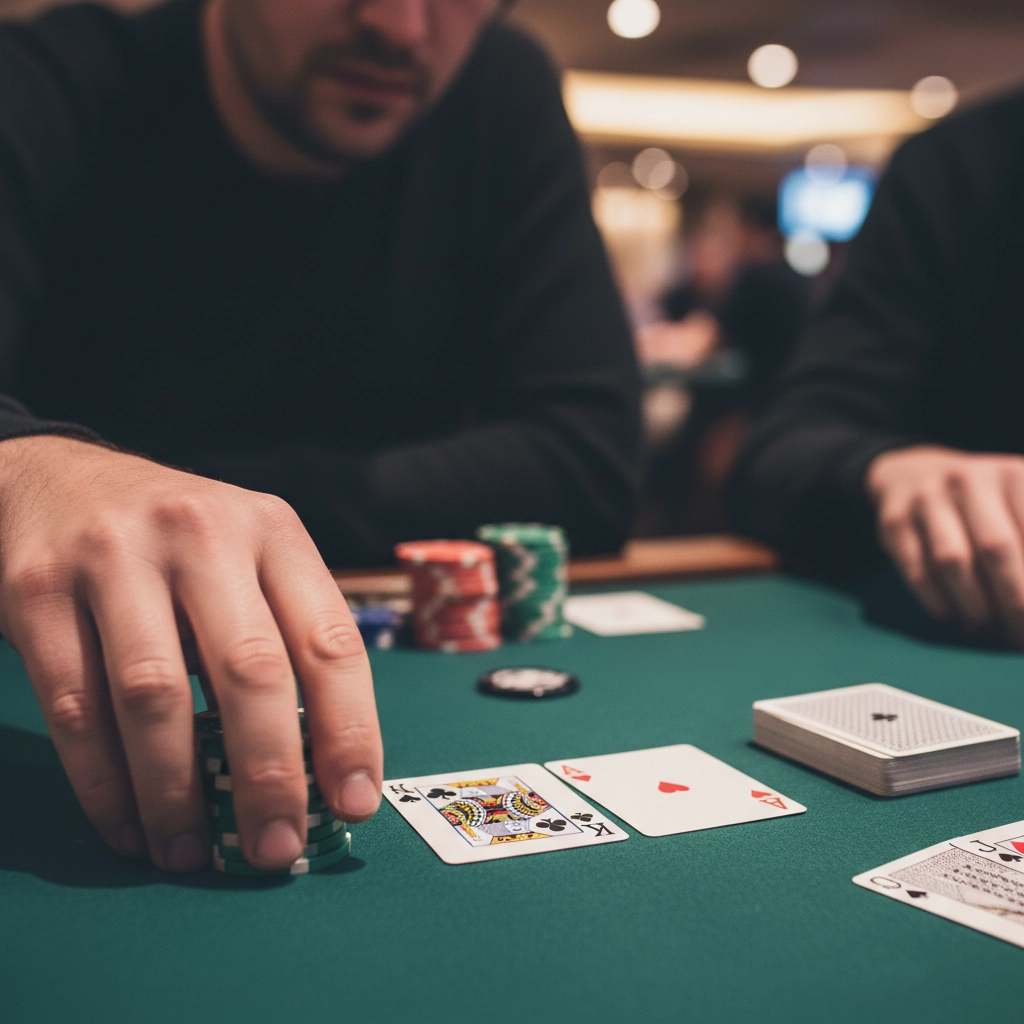
Putting semi-bluffs into practice
Semi-bluffing on the turn and river is as much about discipline and timing as it is about cards. Treat each semi-bluff as a planned line: assess equity, define your opponent’s likely responses, decide whether you’ll barrel again or release, and stick to that plan. Review hands after sessions, track which opponents fold to aggression, and gradually expand spots where you apply pressure. If you want guided drills and range work, resources like Upswing Poker can help you practice sizing and line selection off the table.
- Start small: test turn semi-bluffs in low-stakes or single-opponent spots before scaling up.
- Log sessions and review marginal spots where fold equity and raw equity were misjudged.
- Use blockers and range credibility deliberately on the river—don’t bluff without a story.
- Adjust quickly: if an opponent stops folding, shift back to straightforward draw play.
Frequently Asked Questions
When should I fold a turn semi-bluff after being raised?
If your opponent’s raise polarizes their range (big sizing from an aggressive player) and you don’t have the pot odds, strong blockers, or commitment to continue to the river, folding is often the correct choice. Re-evaluate based on stack depth, read on the opponent, and whether calling keeps better hands in.
How do I estimate fold equity at the table without precise math?
Use tendencies and recent behavior: how often does this player fold to single-barrel pressure? Consider board texture and your perceived range. If they’ve been folding frequently and the board is dry, assume higher fold equity; if they’re sticky or the board is coordinated, assume lower. Over time, convert these qualitative reads into rough percentages for sizing decisions.
Are river overbets a good way to semi-bluff when I have blockers?
River overbets can work when your line credibly represents polarized ranges and you hold key blockers to the nuts. They’re high-variance and should be used selectively—against opponents who can and will fold strong but non-nut hands. Avoid overbet bluffs versus calling stations or players who interpret overbets as pure bluffs and call wide.