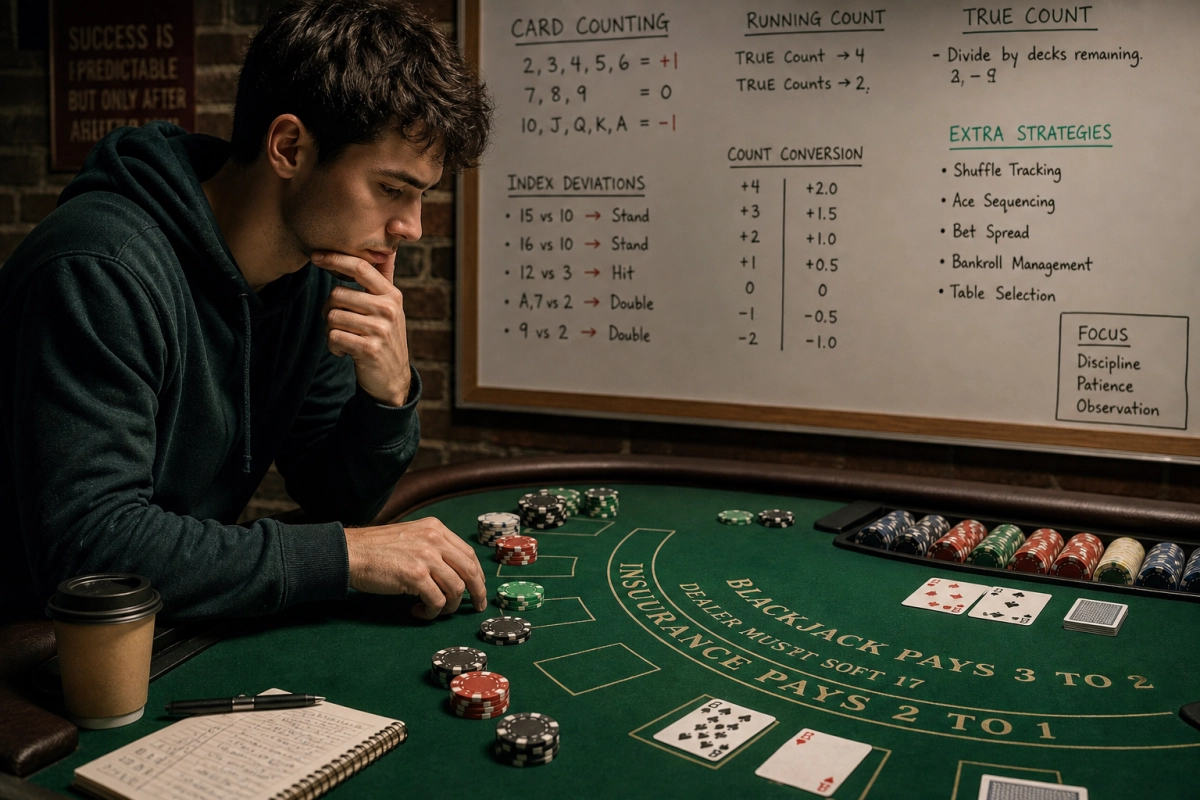
Why bluffing shapes the game and how you take control
You already know that poker is more than the cards in your hand; it’s a contest of information, perception, and pressure. Bluffing is the tool that lets you turn those unseen forces into chips. When you bluff well, you force opponents into fold-or-call dilemmas, protect your strong hands by making them less obvious, and shape the table’s respect for your betting patterns. When you bluff poorly, you leak chips and teach others how to play you. The challenge is learning how to use bluffing to control the table rather than letting it control you.
Think of a successful bluff as a performance: you must tell a coherent story with your bets, timing, and body language (if playing live). That story has to fit the board, your perceived range, and the specific opponent you face. Bluffing isn’t random aggression; it’s a deliberate attempt to manipulate choices by creating a believable line of play that implies strength.
Foundations: practical checks before you bluff and basic tactics
Before you fire a bluff, run a quick checklist in your head. Those few seconds of disciplined thinking separate profitable aggression from futile theatrics. You’ll want to consider position, stack sizes, opponent tendencies, and board texture. Each factor changes the risk and the fold equity you’ll realistically obtain.
Checklist you should mentally run
- Position: Are you last to act? Bluffing from late position increases your options and reduces the chance you’ll face a surprise raise.
- Stack sizes: Do stacks allow the opponent to fold? Short stacks commit more easily; deep stacks can call and outplay you on later streets.
- Opponent type: Is the player tight and risk-averse or sticky and curious? Tight players fold more; loose players call down. Adjust accordingly.
- Board texture: Does the community cards tell a believable story of a big hand (e.g., coordinated, wet boards) or is it dry where bluffs often look weaker?
- Bet sizing consistency: Can your sizing be explained by a legitimate strong hand in your perceived range?
Simple tactical building blocks
Use these basic tactics as you start incorporating bluffs into your game. First, mix bluffs and value bets so your opponents can’t easily categorize you. Second, size your bets to create similar pot odds to the lines you’d take with the hands you’re representing. Third, choose moments where future streets won’t ruin your story—if a turn or river could produce a card that invalidates your narrative, be cautious about committing too much earlier.
Finally, remember that successful bluffing is cumulative: it relies on image, table history, and timing. Your next step is to learn how to construct believable bluff ranges and pick the precise moments to push opponents off hands; in the following section you’ll see concrete range construction examples and timing cues to apply at the table.

Constructing believable bluff ranges (practical examples)
Building a bluff range isn’t about picking random weak hands and firing chips — it’s about selecting hands that plausibly belong to the same line as your value hands. Start by imagining the strong hands you’d like your opponent to believe you hold on each street, then pick bluffs that share those characteristics: similar card values, suits, and playability.
Example 1 — Button vs. Late-Position Open on Q♠ J♠ 7♦:
- Value range (what you want to represent): Qx hands with spade or backdoor diamond protection (Q♠9♣, Q♠Jx), sets (77, JJ), and two-pair combos.
- Bluff range (hands that tell the same story): A♠T♣, K♠T♣, or T♠9♣ — hands with a spade blocker and reasonable showdown equity.
Those bluffs make sense because they include spade blockers (reducing your opponent’s flush combinations), have plausible turn plans (barrel a blank or pick up extra outs), and can credibly have reached the flop by 3-betting or calling preflop. They also have backdoor equity, turning a failed bluff into a semi-bluff with actual cards left to improve.
Example 2 — Three-bet pot on a monotone, wet board:
- Value: big suited connectors turned into sets or two-pair plays.
- Bluff: hands with overcards plus a blocker (A♦K♦ on a flush-heavy board of ♦), or hands that often fold out midpairs like A-highs with a diamond.
In short: choose bluffs that could realistically be in your opponent’s mind as value, include blockers to reduce strong combos, and prefer hands with at least some turn equity so you retain options on later streets.
Timing, blockers and multi-street storytelling
Bluffing is a story told over multiple streets. Your flop action must be consistent with how you’ll act on the turn and river if the board develops. That means planning: identify plausible turn cards, decide whether you’ll barrel or check, and choose bluff sizes that leave room for later maneuvers.
Blockers matter more than many amateurs realize. Holding an ace or the nut-suit card reduces the number of opponent hands that beat your narrative — increasing fold equity. For example, A♠ on a spade-heavy board significantly decreases your opponent’s flush combinations and makes a large bet more credible.
Multi-street approach:
- Flop: Use smaller sizing (25–40% pot) to probe and fold cheaply if you face resistance, especially in multiway pots or when your story could later break.
- Turn: Barrel when you still have a coherent story and decent fold equity (a blank turn that still “fits” your line). If the turn pairs the board or completes obvious draws you should have represented, slow down.
- River: Commit only with either a clear nut representation or when your opponent is likely to fold to heavy pressure; otherwise prefer thin value or show-down hands.
Remember timing cues from opponents: quick checks/calls usually indicate weakness on non-showdown hands; deep tanks on marginal boards can be exploitation targets for a well-sized shove. Finally, balance your approach — over-bluffing ruins your credibility, but selective, story-driven aggression will consistently force respect and control the table.

Putting it into practice
Bluffing becomes reliable when it’s part of a disciplined routine, not a spur-of-the-moment stunt. Treat each session as an experiment: pick a few planned bluff spots, observe how opponents react, and adjust your approach based on real results. Focus on refining your timing and emotional control as much as your bet sizing or hand selection.
Keep a short hand-history log after sessions—note one successful bluff and one failed bluff and why each played out the way it did. Over time those small adjustments compound into a coherent table image that helps you steer pots and opponents with less guesswork and more intention.
If you want drills, range charts, and examples to practice against, check reputable strategy resources such as PokerNews Strategy to expand your toolkit and see how top players structure their bluffs.
Above all, protect your bankroll and your reputation at the table: bluff selectively, respect table dynamics, and let your bluffs earn you the table control you want—one well-planned story at a time.
Frequently Asked Questions
When should I avoid bluffing?
Avoid bluffing when your story is easily contradicted by likely hands, against very sticky or deep-stacked opponents who can call down, or when your image at the table is already overly aggressive and unreadable. Also be cautious in multiway pots where fold equity is inherently lower.
How do blockers influence my bluff decisions?
Blockers reduce the number of opponent combinations that beat the hand you’re representing, which increases fold equity. Holding an ace or the nut-suit card on a draw-heavy board makes large bets more believable because opponents are less likely to hold the nuts you’re representing.
How frequently should I mix in bluffs during a session?
There’s no fixed percentage, but aim for selective, story-driven bluffs rather than a constant barrage. An effective rule of thumb is to incorporate bluffs where they complement your value range and table image—enough to remain unpredictable, but not so often that opponents stop giving you credit for strength.