How the dealer’s rules shape every hand you play
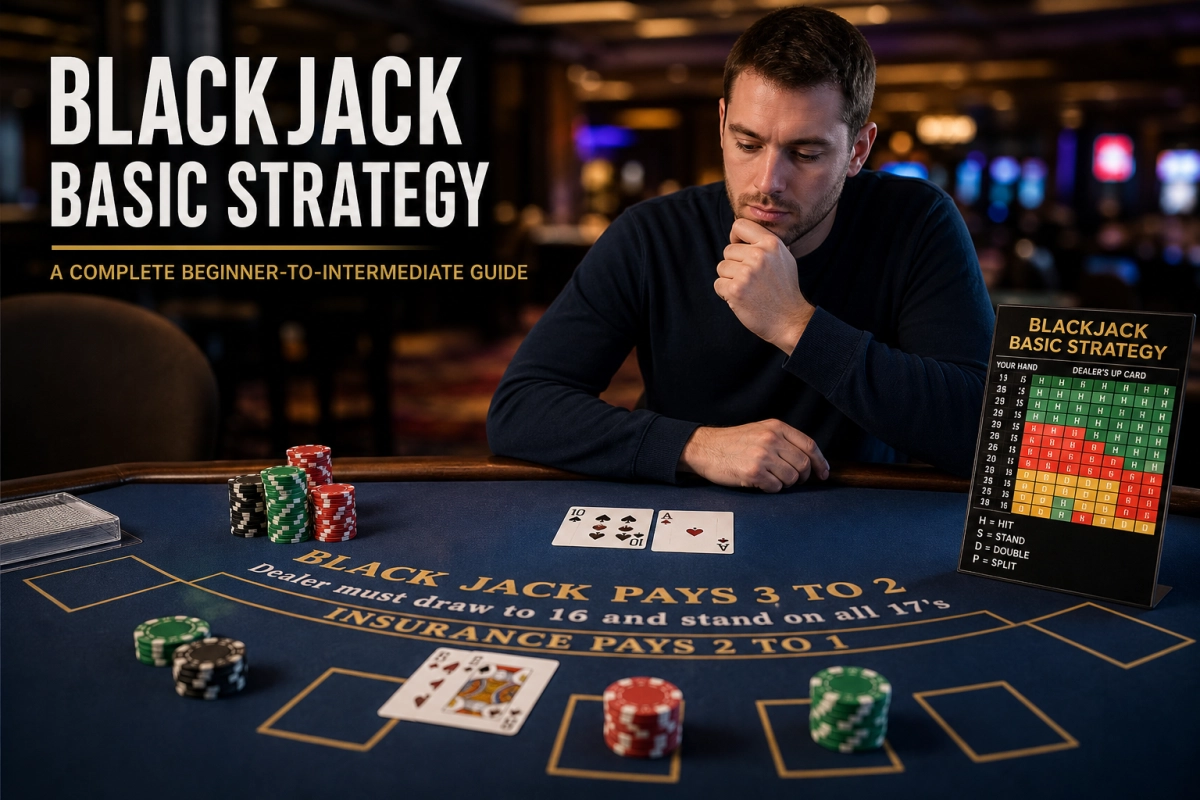
When you sit at a blackjack table, the dealer’s behavior is the single most consistent factor in every round. You don’t control the dealer, but you must understand the mechanics they follow: the dealer must draw cards according to fixed rules, reveal or peek for blackjack in certain ways, and execute payouts dictated by the table. Knowing these rules helps you anticipate outcomes and choose the best plays.
Standard dealer actions you need to know
- Hit until 17: Most casinos require the dealer to hit until they reach a total of 17 or higher. That includes a “soft 17” (an ace counted as 11 plus other cards equaling 17) in some games where the dealer still hits.
- Soft 17 variations: If the dealer hits on soft 17 (H17), the house edge increases slightly compared with standing on soft 17 (S17). You should watch the table rules before you play.
- Hole card (American) vs. no-hole-card (European): In the American version, the dealer deals one card face down (the hole card) and checks it immediately if their upcard is an ace or ten-value card. In European games the dealer doesn’t take the hole card until players finish acting, which affects when and whether you can surrender or double down safely.
- Dealer peeks for blackjack: If the dealer’s upcard is an ace or ten-value, they’ll often peek for blackjack. That can save you from making extra bets like doubles or splits that would be immediately lost to a dealer blackjack.
Common payouts and the basic odds behind them
Understanding payouts and basic probabilities is vital for managing your bankroll. Payouts determine the reward for a winning hand; odds determine how often you can expect certain outcomes. Together they define the game’s math and the house edge you face.
Typical payout structures and what they mean for you
- Blackjack payout: The classic blackjack pays 3:2 (1.5x your bet) for a natural 21. Some casinos offer 6:5 instead, which significantly worsens your expected return.
- Even money and insurance: Insurance pays 2:1 when the dealer shows an ace, but it’s a separate side bet with poor expected value for the player. “Even money” is essentially accepting insurance when you have a blackjack—mathematically equivalent to taking insurance and usually not optimal.
- Push and win: If you and the dealer tie, the hand is a push and your stake is returned. Regular wins pay 1:1.
Quick odds to keep in mind
- The dealer has a slightly higher chance to win than you on a single hand because they act last and win ties. House edge varies by rules but often sits between 0.5% (good rules, basic strategy) and several percent (poor rules like 6:5 blackjacks).
- Your bust probability depends on your total; for example, hitting on 12–16 carries a much higher bust risk than hitting on 11 or less.
- Basic strategy—adjusted for dealer upcard and rule set—reduces the house edge significantly by choosing the statistically best action each time.
With these dealer behaviors, payout structures, and baseline odds in mind, you’re ready to learn how to apply basic strategy, when to split or double, and how rule variations change the math — topics we’ll cover next.
Basic strategy: the mathematically best play for every two-card situation
Basic strategy is a set of optimal choices — hit, stand, double, or split — determined by your hand and the dealer’s upcard. It minimizes the house edge by using probabilities rather than intuition. Charts vary slightly by rule set (S17 vs H17, number of decks, DAS allowed), but the core principles remain consistent.
- Hard totals: Always stand on 17 or more. For 13–16, stand if the dealer shows 2–6 (they’re more likely to bust), hit against 7–A. For 12, stand vs dealer 4–6, hit vs 2–3 and 7–A.
- Doubling decisions on hard hands: Double 11 against any dealer upcard except an ace in some charts; double 10 vs dealer 2–9; double 9 vs dealer 3–6. When you double you take one more card and commit to it — use this when you have a strong chance to beat the dealer with one extra card.
- Soft totals (hands with an ace counted as 11): These are flexible. For example, soft 18 (A-7) is generally a stand vs dealer 2,7,8; double vs 3–6; hit vs 9–A. Soft 13–15 are usually doubled vs 4–6, otherwise hit.
Memorize the few key rules above or use a basic-strategy chart suited to the table rules. Small deviations in strategy can cost you a meaningful fraction of the edge reduction basic strategy provides.
When to split pairs — and the costly mistakes to avoid
Splitting turns one hand into two independent hands with an extra wager. Proper splitting exploits dealer weaknesses and can swing expected value in your favor.
- Always split: Aces and 8s. Aces give you two chances for a blackjack-like 21; splitting 8s converts a terrible 16 into two workable hands.
- Never split: Tens (including face cards) and 5s. Two tens already total 20 — one of the best hands — and splitting 5s wastes a strong 10 total that is better doubled against many dealer upcards.
- Situational splits: Split 2s and 3s vs dealer 2–7 (or 2–6 in stricter tables), split 6s vs 2–6, split 7s vs 2–7, split 9s vs 2–6 and 8–9 (stand vs 7,10,A).
Rules like “resplit aces” and “double after split (DAS)” greatly affect splitting strategy. If resplitting is allowed and you can double after a split, you should be more aggressive with splits; if not, be more conservative.
Doubling down, surrender, and how rule variations change the math
Doubling down and surrender are powerful tools when used correctly. Doubling increases potential returns with favorable odds; surrender cuts your loss in half when the situation is bleak.
- Doubling: Look to double when your two-card total has a high probability of improving relative to the dealer’s upcard (common examples: 10 or 11 vs weaker dealer cards, soft hands as noted above). Check if the table allows doubling after splits — DAS lowers the house edge and alters which hands you split.
- Surrender: Late surrender (allowed after dealer checks for blackjack) is common; early surrender is rarer but better for the player. Typical surrender spots: hard 16 vs dealer 9–A and hard 15 vs dealer 10. Use surrender when the expected loss from playing is greater than conceding half your bet.
- Rule effects: Dealer hits soft 17 (H17) raises the house edge slightly; 6:5 blackjack dramatically worsens your return. More decks slightly increase the house edge and tweak some strategy decisions. Always check the rule sheet — it changes which plays are +EV or -EV.
With these strategy rules in hand and an eye on table specifics, you’ll make decisions that convert the game’s long-run math into the best short-term choices possible.
Putting strategy into practice
Knowledge is only useful when you apply it. Start small, build habits that protect your bankroll, and treat each session as a learning opportunity rather than a quick route to profit. Practical steps and disciplined routines will turn theory into better long-term results.
Practical tips to improve your play
- Practice with free online simulators or low-stakes tables to internalize basic strategy without risking much.
- Always check the table rules before you sit down; small differences (blackjack payout, H17 vs S17, DAS) change the math and the right plays.
- Use a durable basic-strategy chart until the responses become automatic; avoid second-guessing in the moment.
- Manage your bankroll: set session limits, bet sizes as a percentage of your bankroll, and stop-loss/win targets to avoid emotional decisions.
- Keep emotions and alcohol out of decision-making; clear, consistent choices trump impulsive moves.
- When you’re ready to deepen your edge, study reputable resources and advanced concepts cautiously—never jump into complex systems without practice.
For reliable strategy guides, drills, and probability breakdowns, consult expert resources such as the Wizard of Odds blackjack guide.
Play responsibly, stay curious, and let disciplined practice shape better decisions at the table. Good luck, and enjoy the game.