Why blackjack rewards smart play more than luck
Blackjack is one of the few casino games where your choices directly affect the house edge. When you understand the rules, table flow, and correct decisions in common situations, you reduce the casino’s advantage and increase your chances of winning over time. This guide teaches you the foundation so you can make informed plays instead of guessing.
How the game works in a few simple steps
At its core, blackjack is a showdown between you and the dealer. You’re trying to get a hand total closer to 21 than the dealer without going over (“busting”). The dealer follows fixed rules; you decide how aggressively to play. Knowing the sequence of play helps you anticipate outcomes and manage risk.
- Initial deal: You and the dealer receive two cards. Your cards are usually both face-up; the dealer has one face-up (the upcard) and one face-down (the hole card).
- Card values: Number cards count as their face value, face cards count as 10, and aces count as 1 or 11—whichever helps your hand.
- Objective: Beat the dealer’s hand without exceeding 21. Blackjack (an ace + a 10-value card on the initial deal) typically pays 3:2.
Essential table rules and player options you must know
Before you place a bet, you should know the specific table rules because they affect strategy. Rules vary by casino and can change the house edge. Focus on how many decks are in play, whether the dealer hits or stands on soft 17, and payout for blackjack.
Common player choices and when they apply
During your turn you’ll choose from a small set of actions. Learn what each option does and the general situations where it’s appropriate.
- Hit — Take another card. Use when your hand is weak relative to the dealer’s upcard or your total is low enough that another card is unlikely to bust you.
- Stand — Take no more cards. Good when your total is strong enough to likely beat the dealer or when drawing risks busting.
- Double down — Double your bet, take exactly one more card, then stand. Often used on totals of 9–11 against a dealer’s weak upcard.
- Split — If you have a pair, you can split into two hands and play them separately. Splitting aces and eights is often correct; never split tens.
- Surrender — Forfeit half your bet and end the hand. This option helps minimize losses in very unfavorable situations if the table allows it.
Understanding these options and how the dealer’s fixed behavior interacts with your choices is the groundwork for basic strategy. With the rules and actions clear, you’re ready to learn the core decision chart that tells you when to hit, stand, split, or double in every common situation.
Basic strategy made simple: the plays you’ll use most
Basic strategy reduces hundreds of possible choices into a few repeatable rules you can apply quickly. Here are the high-frequency situations and the right plays that will cover the majority of hands.
- Hard totals (no usable ace)
- Hard 17 and up: always stand.
- Hard 13–16: stand if the dealer shows 2–6 (dealer is likely to bust); otherwise hit.
- Hard 12: stand vs dealer 4–6; hit vs 2,3 and 7–A.
- Hard 11: double vs any dealer upcard (or hit if doubling not allowed).
- Hard 10: double vs dealer 2–9; otherwise hit.
- Hard 9: double vs dealer 3–6; otherwise hit.
- Soft totals (hand contains an ace counted as 11)
- Soft 19 (A+8): usually stand; double vs dealer 6 in some rules.
- Soft 18 (A+7): stand vs 2,7,8; double vs 3–6 if allowed; hit vs 9–A.
- Soft 13–17 (A+2 through A+6): double vs dealer 4–6 (and sometimes 3–6); otherwise hit.
- Pairs
- Always split aces and eights.
- Split 2s and 3s vs dealer 2–7; split 6s vs 2–6; split 7s vs 2–7.
- Split 9s vs dealer 2–6 and 8–9; never split 10s (or face-card pairs).
These rules are a condensed version of full basic strategy. They work for most common rule sets and will significantly lower the house edge compared with guessing.
Using a basic strategy chart confidently at the table
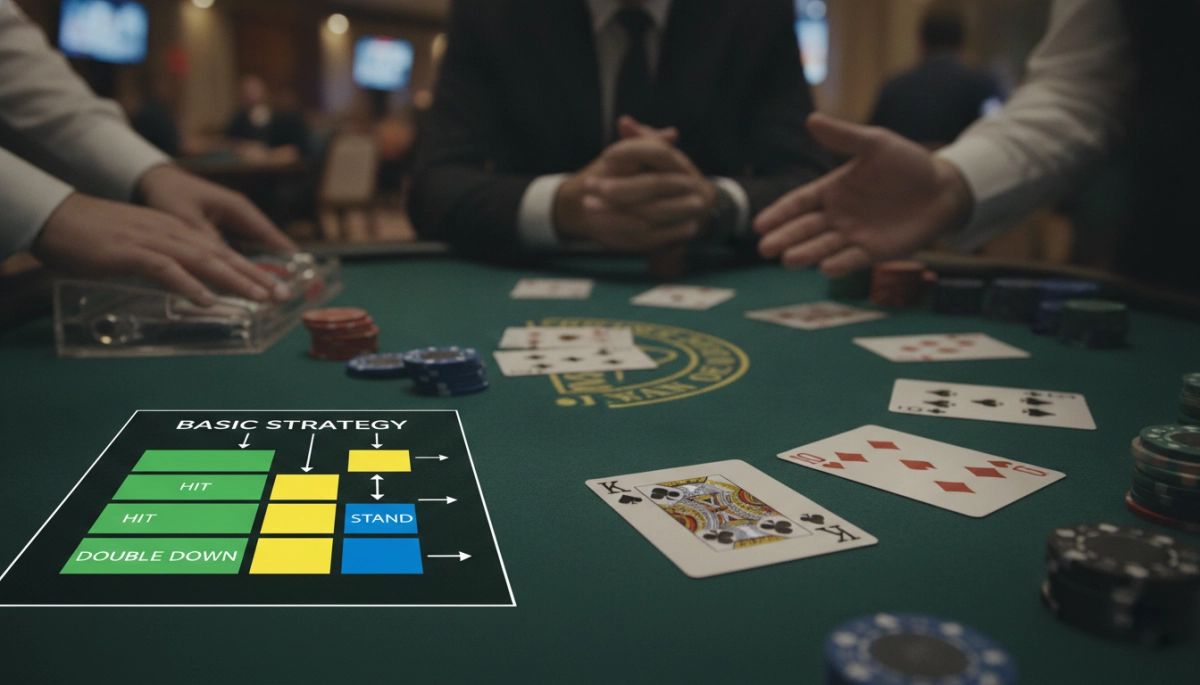
A printed or memorized basic strategy chart is a player’s best friend. Casinos permit small strategy cards, and using one keeps your decisions consistent under pressure. Here’s how to make it practical:
- Start by learning a few key rules from the previous section; they cover most hands you’ll see.
- Keep a small chart or phone image handy while you’re learning. Glance at it between hands rather than pausing during play—most dealers and players expect brief checks.
- When a situation on the chart conflicts with intuition (for example, standing on 12 vs a 2), trust the chart; it’s based on long-run probabilities, not short-term feel.
- Adjust slightly for rule variations: if blackjack pays 6:5 (worse payout) or the dealer hits soft 17, the exact chart shifts. In those tables, basic plays still help, but seek tables with favorable rules when possible.
Bankroll management and practical betting tips
Good decisions at the table are only half the game—managing money and emotions matters just as much.
- Set a session bankroll and stick to a unit size of about 1–2% of that bankroll per hand. This prevents catastrophic losses from a short run of bad cards.
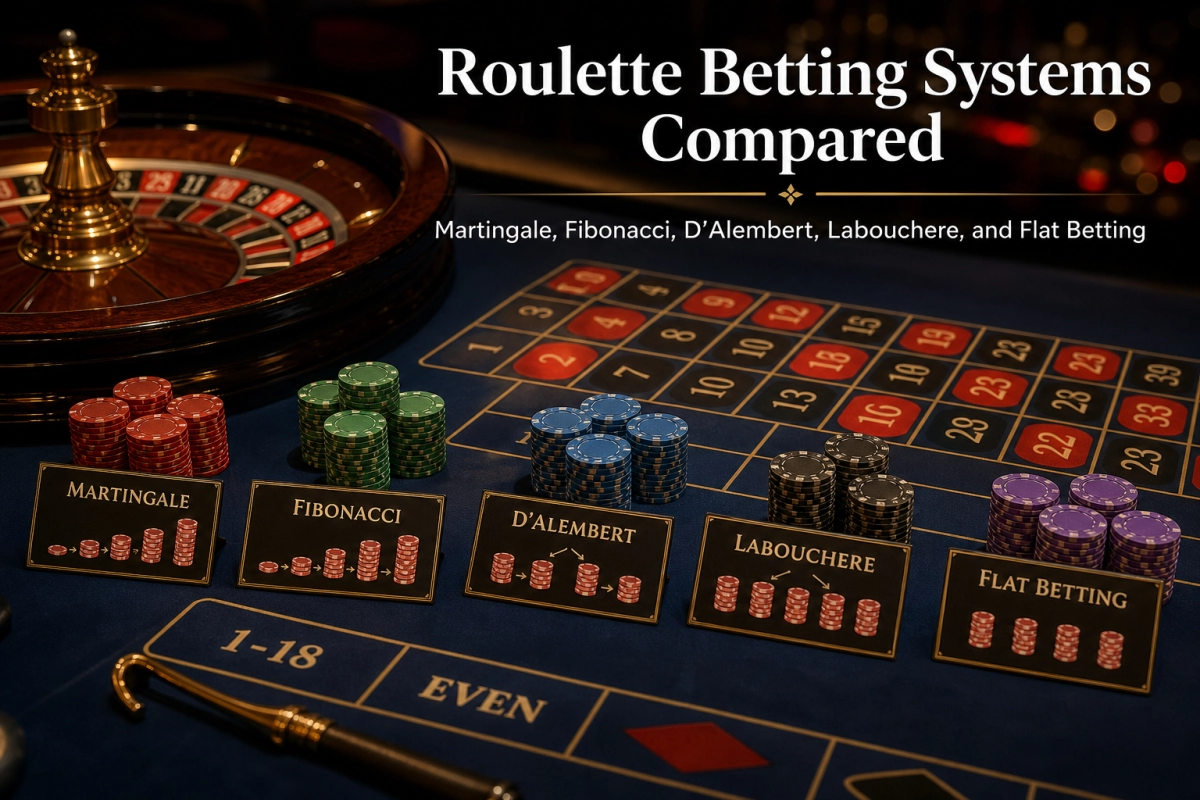
- Flat betting (same bet size each hand) is the simplest and least risky approach. Progressive schemes can increase variance and risk larger losses.
- Establish stop-loss and stop-win limits before you start (for example, leave after losing 30% of your session bankroll or after winning 50%). Walking away on a win preserves gains.
- Table selection matters: prefer 3:2 blackjack payouts, dealer stands on soft 17, double after split allowed, and fewer decks. These small rule differences change the house edge over time.
- Keep emotions in check. If you find yourself chasing losses or making impulsive doubles/splits, take a break or reduce bet size.
Applied together—basic strategy decisions plus disciplined bankroll management—you’ll play smarter and maximize your chances to win over many sessions.
Practice tools and study aids
To turn knowledge into habit, practice regularly away from the pressure of real money. Use basic strategy trainers, free online simulators, and printable charts to drill common situations until decisions become automatic. For reliable calculators, charts, and in-depth explanations of how rules affect strategy, see Wizard of Odds blackjack tools.
Table etiquette and quick reminders
- Be clear and decisive with your actions—dealers and other players appreciate it.
- Don’t touch cards if the table uses a continuous shuffling machine or face-down dealing rules; follow the casino’s protocol.
- Accept that variance is part of the game; short-term results won’t always reflect correct play.
- Stick to your bankroll and limits—emotion-driven deviations cost more than the occasional bad beat.
Putting strategy into action
With the fundamentals in place and practice under your belt, the next step is simple: play deliberately. Use basic strategy, manage your bankroll, and choose favorable tables. Treat each session as practice in decision-making rather than a quest for a big score. Over time, disciplined play will give you the best chance to come out ahead or, at minimum, enjoy longer, more controlled sessions. Stay curious, keep learning, and always play responsibly.