Why you lose at the blackjack table more often than you should
Blackjack looks simple: beat the dealer without busting. But the gap between casual play and consistent, low-cost mistakes is surprisingly small. As a beginner you won’t only be competing against the dealer — you’ll be battling common misunderstandings about odds, rules, and how small decisions add up over a session. Recognizing these early pitfalls will stop the biggest leaks in your game.
- Relying on gut instinct: Blackjack is a probabilistic game. Intuition often contradicts what the math favors.
- Skipping basic strategy: Small errors on hit/stand/double/split decisions inflate the house edge quickly.
- Poor bankroll and bet sizing: Betting too large or chasing losses creates stress that worsens decision-making.
- Ignoring table rules: Rules like the number of decks or whether the dealer hits soft 17 materially affect your expected return.
- Falling for side-bet temptation: Attractive payouts usually hide much worse odds than the main game.
Early, actionable steps to stop bleeding money at the table
Follow basic strategy — don’t guess
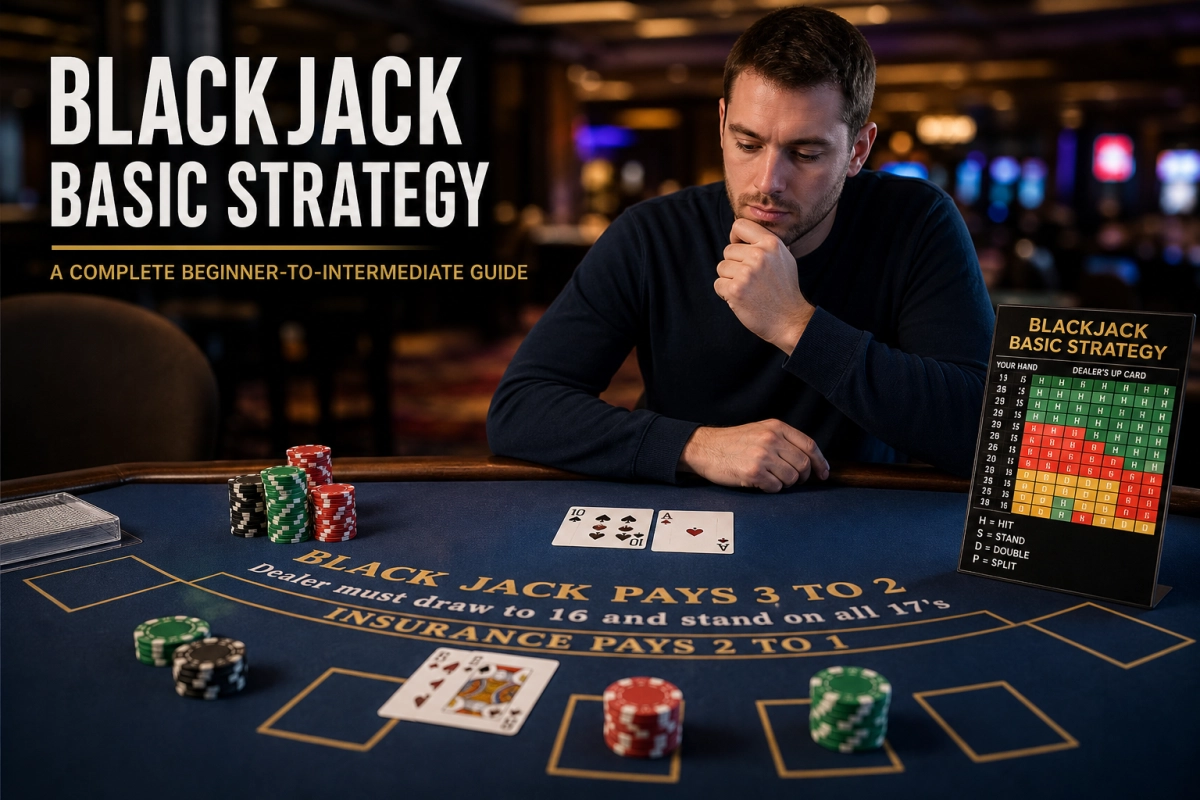
The single most impactful change you can make is using a basic strategy chart. Basic strategy tells you the mathematically best play for any two-card hand against the dealer’s upcard. When you follow it, you shrink the house edge to its lowest practical level (often under 1% depending on rules). Memorize the key decisions: when to stand on hard totals, when to split pairs like 8s and Aces, and when doubling down is profitable. Practice with free online drills until your choices are automatic.
Manage your bankroll before you sit down
Decide on a session bankroll and set a unit size for bets: a common rule is 1–2% of your total session bankroll per bet. That simple discipline prevents a few losing hands from ruining your play and helps you avoid emotionally driven increases in bet size. Avoid progressive systems (e.g., doubling after a loss): they create large variance and often force you to wager far more than your bankroll can handle.
Choose tables and rules that favor you
Not all blackjack tables are equal. Fewer decks, dealer stands on soft 17, and 3:2 blackjack payouts improve your position. Steer clear of 6:5 blackjack or games with overly generous side bets — those options increase the house edge. Also be mindful of table minimums and speed: pick a pace and stake that let you think clearly rather than rush decisions. Finally, practice respectful table etiquette so you stay focused and avoid distractions.
Now that you know which early mistakes to eliminate, the next section will show you a simple basic strategy chart and walk through step-by-step examples of common hands so you can apply the rules at the table.
A compact basic strategy chart you can actually memorize
Below is a short, practical version of basic strategy for the most common situations. This assumes typical casino rules (multiple decks, dealer stands on soft 17, late surrender allowed). Memorize these rules first — they cover roughly 90% of hands you’ll see.
- Hard totals (no Ace): 8 or less — hit. 9 — double vs dealer 3–6, otherwise hit. 10 — double vs 2–9, otherwise hit. 11 — double vs 2–10, otherwise hit. 12 — stand vs 4–6, otherwise hit. 13–16 — stand vs 2–6, otherwise hit. 17+ — always stand.
- Soft totals (Ace counts as 11): A,2–A,3 — double vs dealer 5–6, otherwise hit. A,4–A,5 — double vs 4–6, otherwise hit. A,6 — double vs 3–6, otherwise hit. A,7 — double vs 3–6, stand vs 2,7,8, hit vs 9–A. A,8+ — stand.
- Pairs (splitting): Always split Aces and 8s. Never split 5s or 10s. Split 2s and 3s vs dealer 2–7. Split 4s only vs 5–6. Split 6s vs 2–6. Split 7s vs 2–7. Split 9s vs 2–6 and 8–9 (stand vs 7, 10, A).
Keep this short list in your head rather than trying to remember a big chart. Once these rules are automatic, your hit/stand/double/split errors will drop dramatically.
Applying strategy at the table: step-by-step common hands
Here are concrete examples showing how the rules above play out. Think through these situation-by-situation until the actions feel instinctive.
- Hard 12 vs dealer 4: Stand. Dealer has a high chance of busting showing a 4; standing preserves your chance to win without risking a bust.
- Hard 16 vs dealer 10: Surrender if the table allows late surrender — it saves about 0.5% edge vs playing on. If surrender is not allowed, basic strategy says hit (painful but mathematically better than standing).
- 11 vs dealer 6: Double down. You have a strong chance to make a 20 and the dealer is in a weak position. Doubling maximizes your expected return.
- Pair of 8s vs dealer 10: Always split. Two 8s (16) is a terrible hand; splitting gives two chances to make stronger hands.
- Soft 18 (A,7) vs dealer 6: Double if allowed; otherwise stand. Against a dealer 6, you’re often better off increasing the bet one time since a dealer bust is likely.
- Hard 10 vs dealer 9: Double. Ten is a high win-expectation double spot unless the dealer shows a 10 or Ace in some specific rule sets.
Run through these examples on a phone app or with flashcards until you react correctly without pausing. Speed matters at a busy table — hesitation invites mistakes. If you’re unsure during play, default to hit on weak totals and stand on strong ones until you can practice more.
Simple exceptions and common table-rule tweaks to watch
Not every casino game matches the “typical” rules. Two quick fixes to your plan will save money:
- Insurance: Decline insurance. It’s a sucker bet unless you’re counting and know the deck is rich in tens.
- Surrender rules: If late surrender is offered, use it on 16 vs 9–A and 15 vs 10. If surrender isn’t available, follow basic strategy plays above.
- Bad payout or H17 rules: Avoid 6:5 blackjack payouts and tables where the dealer hits soft 17 — both significantly increase the house edge and can slightly change optimal doubles/splits. If you must play such a table, reduce bet size.
Master these compact rules and exceptions before attempting more advanced topics like card counting or bet shaping — they’re the foundation of disciplined, low-cost beginner play.
Practice and next steps
Small, intentional practice sessions and a quick pre-game checklist will cement the improvements you’ve started making. Before you sit down again, pick two or three habits to focus on rather than trying to change everything at once.
- Spend 10–15 minutes on drills or a free app to engrain common decisions until they’re automatic.
- Play low-stakes or free tables to build confidence under pressure.
- Scan the table rules and payouts before you commit — one glance can save you money.
- Set a session bankroll and unit size, and refuse side bets and insurance unless you have a specific, tested reason to take them.
- Review detailed strategy charts and explanations when you have downtime; a reliable resource is Wizard of Odds basic strategy.
Final thoughts on playing smarter
Play with discipline, patience, and the clear goal of reducing mistakes rather than trying to “beat” the house in the short run. Make steady improvements, treat losses as data to learn from (not a cue to chase), and keep blackjack in the entertainment bucket. Over time, small changes in decision-making and money management add up to noticeably better results — and more enjoyable sessions at the table.