Why your bluffs must be built, not binned
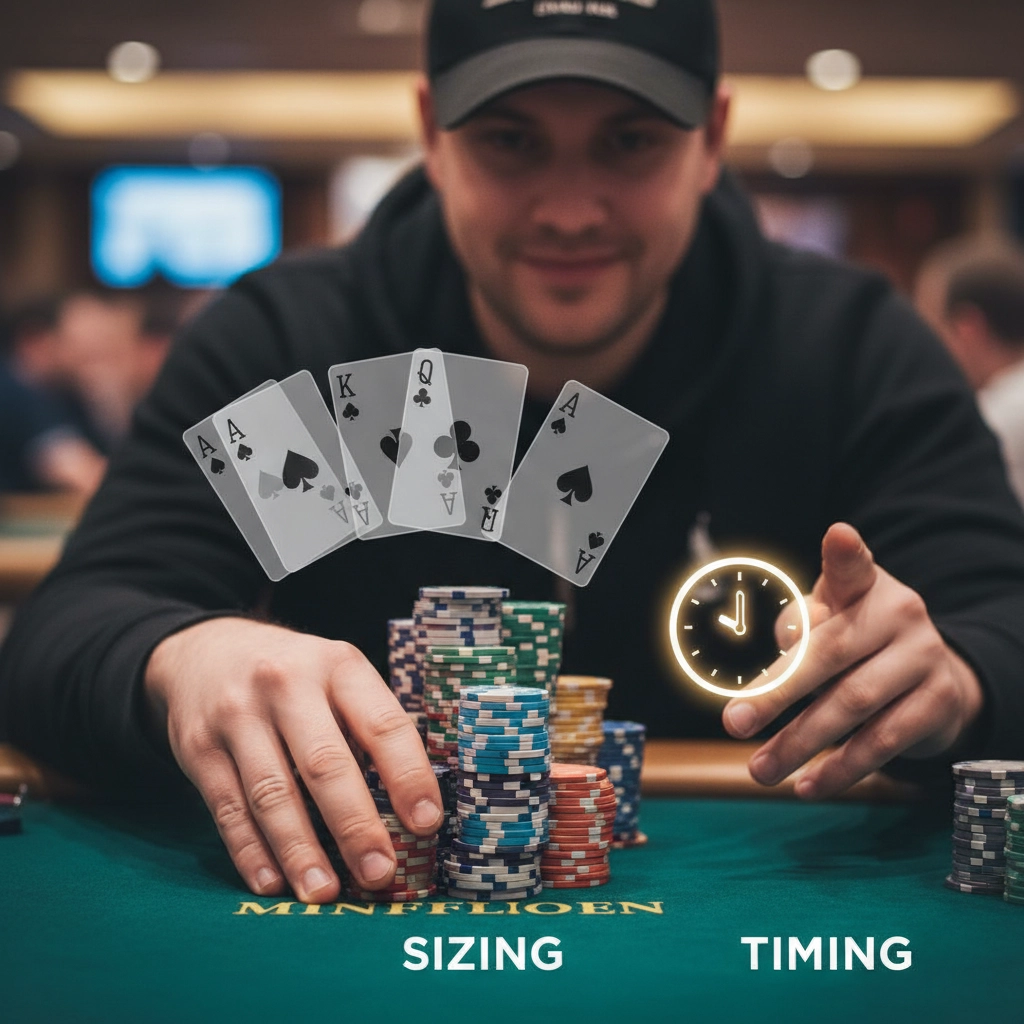
You already know that bluffing is a necessary tool in winning poker, but successful bluffs are rarely intuitive gut plays. When you approach bluffing as a process—combining sizing, range construction, and timing—you stop gifting reads to observant opponents and start creating fold equity on demand. This part explains the core concepts you’ll rely on: how much to bet, which hands belong in your bluffing range, and when to pull the trigger so your line makes sense given the situation.
Think of a bluff as a message you want to send about your range. If your sizing and timing don’t match that message, opponents can call or raise profitably. Conversely, when your bet size and cadence align with a believable value range, your bluffs win more often and cost less when they fail.
Sizing: the single most visible signal you give
Your bet size communicates more information than your words. You control fold equity by sizing correctly; you control deception by mixing sizes. Learn to use a basic set of bet sizes with clear purposes so opponents can’t read your hand from one tell:
- Small bets (20–35% pot): Use to apply pressure cheaply when there are many weak hands to fold or when you want to keep worse hands in to realize equity. Small sizing works well as a blocker or probe on dry boards and against passive opponents.
- Medium bets (~50% pot): Your default. Good for denying equity to draws and balancing value and bluffs. Medium sizes often maximize fold equity against calling station opponents while still retaining fold equity versus competent players.
- Large bets (70–100% pot): Polarized—this should represent either very strong hands or thin bluffs with significant blockers. Large sizes force tough decisions and punish overcards or marginal draws, but cost more when called.
Use stack-to-pot ratios and the number of streets left to choose sizes: with deeper stacks you need larger and more credible bluffs; with shallow stacks, fewer, larger polarizing bets near all-in size are effective. Also vary sizes by board texture—wet boards warrant larger bets to deny straight/flush equity while dry boards allow for smaller, frequent bluffs.
Constructing bluffing ranges and timing your attacks
Bluffs aren’t single hands; they’re parts of a range that must fit your overall strategy. Build bluff hands around blockers and hands that have some equity (semi-bluffs). That way you don’t just rely on fold equity—your hand can improve, or you can realize equity at showdown if called.
- Prioritize blockers: Choose bluffs that remove strong hands from your opponent’s range (e.g., holding the ace of a board suit when representing nut flushes).
- Semi-bluffs are gold: Hands with backdoor draws or open-ended potential make safer bluffs because they maintain equity if called.
- Target the situation: Bluff more in heads-up pots, late position, and versus opponents who fold to aggression. Avoid large bluffs multi-way or into sticky opponents who call down light.
- Timing your barrels: Plan the entire line before you act. If you plan to double-barrel, your sizing on the first street should set up credibility for the second.
Use this checklist before committing to a bluff: position, range advantage, opponent tendencies, board texture, stack depth, and chosen size. With those elements aligned you dramatically increase your bluffing success rate.
Next, you’ll apply these principles to concrete scenarios—calculating fold equity, balancing ranges with cold-decked blockers, and building multi-street bluff sequences with math and examples.
Calculating fold equity: the practical math
If bluffing is a gamble, fold equity is the odds you’re buying. The basic formula to remember is:
Required fold frequency = bet size / (pot + bet size)
So if the pot is $100 and you bet $50, you need your opponent to fold more than 50 / (100 + 50) = 33.3% of the time for the bluff to break even. That’s the starting point — then layer in your hand’s equity when called. If your semi-bluff has 20% equity against the caller’s range, you can afford to be called more often than a pure bluff.
Practical steps:
– Calculate the break-even fold rate for the street you’re on. If you can realistically induce that frequency from opponent tendencies, proceed.
– Add equity when called: Effective required fold rate = (bet size – equity × (pot + bet size)) / (pot + bet size). Use this when your hand can improve.
– For multi-street bluffs, multiply the probabilities. If you need a 40% fold on the flop and then 60% on the turn to make the whole line profitable (when faced with a turn decision), the combined probability you need is 0.4 × 0.6 = 24%.
Always factor in stack-to-pot ratio (SPR). Low SPRs compress decisions and make large polarizing bluffs (near all-in) more viable; high SPRs demand credible multi-street plans and more semi-bluffs that can improve if called.
Balancing ranges with blockers and polarizing vs. merged lines
A balanced bluffing range prevents opponents from picking you off by targeting the most likely bluffs. Two core approaches: polarizing (big bets that represent nuts or air) and merged (medium bets that include many medium-strength hands). Use blockers to skew perceived distributions in your favor.
Guidelines:
– Large bets should be heavily polarized: more value combos than bluffs, but the bluffs you do include should carry strong blockers (e.g., the ace of the flush suit on a flushy board) or decent backdoor equity.
– Medium bets can be merged: include both thin value hands and more bluffs, letting you avoid over-committing to extreme narratives.
– Track combo counts: if you c-bet a particular sizing too frequently with obvious air hands, opponents will exploit you by calling wider or raising. Mix in hands that block their likely nuts to make your bluffs look like possible strong holdings.
Example: on a spade-heavy board, make your large, polarizing double-barrels include some combos with the ace of spades. Those hands reduce the frequency of opponents holding the nut flush and increase the credibility of representing it.
Designing multi-street bluff sequences
A successful multi-street bluff is a planned story you can tell every street. Decide preflop what lines you want to take and size the flop bet to set up believable turn and river actions.
Plan the line by answering:
– What range do I want to represent on the river? Work backward from there.
– Does my flop sizing allow a believable turn size if I continue? Small flops can undercut turn credibility.
– Which turn/river cards improve or destroy my narrative? Barrel into cards that remove plausible hero hands from the opponent’s range (e.g., a scare card that completes a draw you could credibly have been denying).
Example sequence: CO opens, BTN calls, you c-bet 50% pot on a dry J-7-2 with A♣ as a blocker. You choose that flop sizing because if called, a blank turn permits a larger 70–90% polarizing shove; the blocker on the flop reduces the likelihood the caller has JJ+. If the turn brings a scary card that helps draws, check or use a smaller turn probe rather than auto-barreling. Planning like this keeps your lines coherent and your bluffs believable.
Practice drills to sharpen your bluffing
Turn the concepts into habits with focused practice sessions. These drills train sizing intuition, range construction, and timing under realistic conditions.
- Hand-history review: Tag every bluff attempt and note opponent type, sizing, board texture, and outcome. Look for patterns in when your bluffs succeeded or failed.
- Sizing drills: Play a series of hands where you only use one of the three core sizes (small, medium, large) and analyze which hands and boards make each size believable.
- Semi-bluff focus: Run sessions where you intentionally include only semi-bluffs on the flop; track how often they improve versus how often opponents fold.
- Multi-street storytelling: Practice constructing full-lines preflop through river. After each hand, score how coherent your narrative would look to an opponent.
- Solver and sim work: Use equity calculators or solvers to test required fold frequencies and to verify blocker impact on perceived ranges.
A practical charge
Bluffing is a skill you refine, not a knack you stumble into. Work these drills into your study routine, keep detailed notes, and let small, measured experiments guide your adjustments. If you want deeper theory and drill ideas, this collection of advanced guides is a solid next step: Advanced Bluffing Resources.
Frequently Asked Questions
How do I pick the right bluff size against different opponent types?
Match your sizing to opponent tendencies and board texture. Versus calling stations, prefer smaller, more frequent bluffs that conserve chips; against tighter, more risk-averse players, medium-to-large sizes that demand a high fold frequency work best. Always factor in whether the board favors a value range or is more ambiguous.
When is a semi-bluff significantly better than a pure bluff?
Choose semi-bluffs when stacks and board texture give your hand realistic equity if called — for example, with open-ended or backdoor draws on two- or three-street cards. Semi-bluffs are essential in deeper-stack situations and when you anticipate multi-street decisions, because they reduce the penalty of being called.
How can blockers change my bluff frequency and which hands I choose?
Blockers reduce the combos of strong hands your opponent can hold, increasing the credibility of representing those hands and allowing you to include more bluffs in your range. Prioritize bluffs with relevant blockers (like an ace on a flushy board) when using large, polarizing sizes; this lets you bluff less often but more effectively.